Load your card over the Lightning Network - instant, cheap Bitcoin payments instead of on-chain fees.
Short answer:Freedomia is our top-rated Lightning crypto card as of 2026-11-07 (7.2/10), No KYC, 1.3% load fee.
cards on this page: 5 · issuing today (excl. watch list): 3 · independently verified facts: 40% · no KYC at first use: 20%
quick picks
Lightning top-ups without identity friction→Freedomia - Lightning Address funding advertised as instant, no-KYC onboarding, nine-plus chains as fallback rails - the most flexible Lightning entry
consumer-scale bitcoin with Lightning built in→Cash App Card - US banking stack with Lightning payments (USD-balance auto-conversion documented), Round Ups into BTC, $1 minimum buys
The most complete no-KYC crypto card we track: instant virtual Visa, Lightning Address top-ups, Tor support, working ATM withdrawals via Google Wallet NFC, responsive multilingual support and a year of positive user reports with no documented incidents. The fee stack is honest and the 1.3% load is the cheapest in the no-KYC niche. Counterparty risk stays material - the issuer is undisclosed, the operator is a self-declared Delaware LLC at a registered-agent address, balances are custodial with no way back on-chain, and even a chargeback demands KYC and $250. Treat it as a spending pipe: top up, spend, replace.
best no-KYC pickNo KYCLightningXMR direct
1.3% load · 2.5% FX · no cashback
$5,000 (Founder/HODL); $10,000 (MOON, announced)★★★★☆4 (1)Crypto-native 40 h ago
The most mainstream way to hold BTC next to a Visa debit - but the card itself never touches bitcoin: every spend requires selling first, which is a taxable event per transaction. Use it for the Boosts and the frictionless BTC auto-investing, not for crypto-native spending.
The only true bank in this comparison: a Gibraltar credit institution with deposit-guaranteed USD, savings interest paid daily in BTC (USD Savings 4.1% APY since 22 Sep 2026), worldwide metal card spending with no FX fees and high limits. But the general card cashback ended in July 2026 (now a taxi-only 3% campaign for Metal members), the $1,000/year membership makes it a wealth product, and crypto balances are NOT deposit-covered.
A Visa prepaid card integrated with the Blink Lightning wallet: cardholders fund a Card Balance from the wallet (default custodial 'Funded Mode', with a non-custodial option) and any BTC balance is converted to USD at the moment of each transaction. Issued in Puerto Rico with a Honduras-Próspera tech provider; fees and open jurisdictions are only visible in the app.
Watch - do not load funds. Trustpilot reviews (Jan 2026 snapshot, 254 reviews, 2.9 score) document cards canceled en masse on 2025-11-30 with refunds stalled, while the marketing site (Sept 2026 snapshot) still promotes the card and developer docs stayed active (Aug 2026). KYC claims conflict: official email-only wording vs user-forced Sumsub re-KYC. Not a loadable card until refunds and issuance demonstrably resume.
5 programs support Lightning top-ups, and the product logic is precise: card loads are small and frequent by nature, which is exactly the profile on-chain fees punish and Lightning was built for. A $10 on-chain top-up can lose 5% to a flat fee and wait an hour; the same $10 over Lightning settles before you lower the phone and costs what a hop costs. That is why Lightning-native cards exist at all - they are the only crypto cards where the minimum-load row is a non-issue, and the only ones where "top up at the counter" is a normal gesture rather than a planned event. The trade-off for that ergonomics is the program layer this page documents: 5 implementations, different custody models, one unverified.
The Lightning top-up flow, from invoice to spendable balance.
The mechanics, briefly and precisely
The card generates a BOLT 11 invoice or a static LNURL-pay code [1][2]; your wallet routes an HTLC across channels; the program's node settles and credits the balance - milliseconds of routing, no confirmation wait. Two protocol details matter for users: LNURL-pay's static QR makes repeat loads one-scan simple (Freedomia's Lightning Address is this pattern [8]), and the invoice metadata commitment means the program knows exactly what it was paid for - no memo-field guesswork, no misattribution. The failure mode is the friendly one: a failed route never leaves your wallet. And the accounting is cleaner than any other rail: a Lightning top-up is either complete or never happened, so there is no pending state to reconcile against the card's balance - the kind of small property that matters more the more loads you make.
The network behind the payments is real but finite: ~19,800 public channels carrying ~2,690 BTC of capacity (1ml.com, 2026-10-01) [3]. For card-sized payments that capacity is ample; for a single large load it is the constraint - channel liquidity between your wallet and the program's node is the load limit nobody publishes. The practical pattern that works: keep the running balance topped by small Lightning loads and push the monthly volume through on-chain or stablecoin rails, so the Lightning channel is never the bottleneck.
Live values from our database - details and caveats in each review. "-" = not published by the operator.
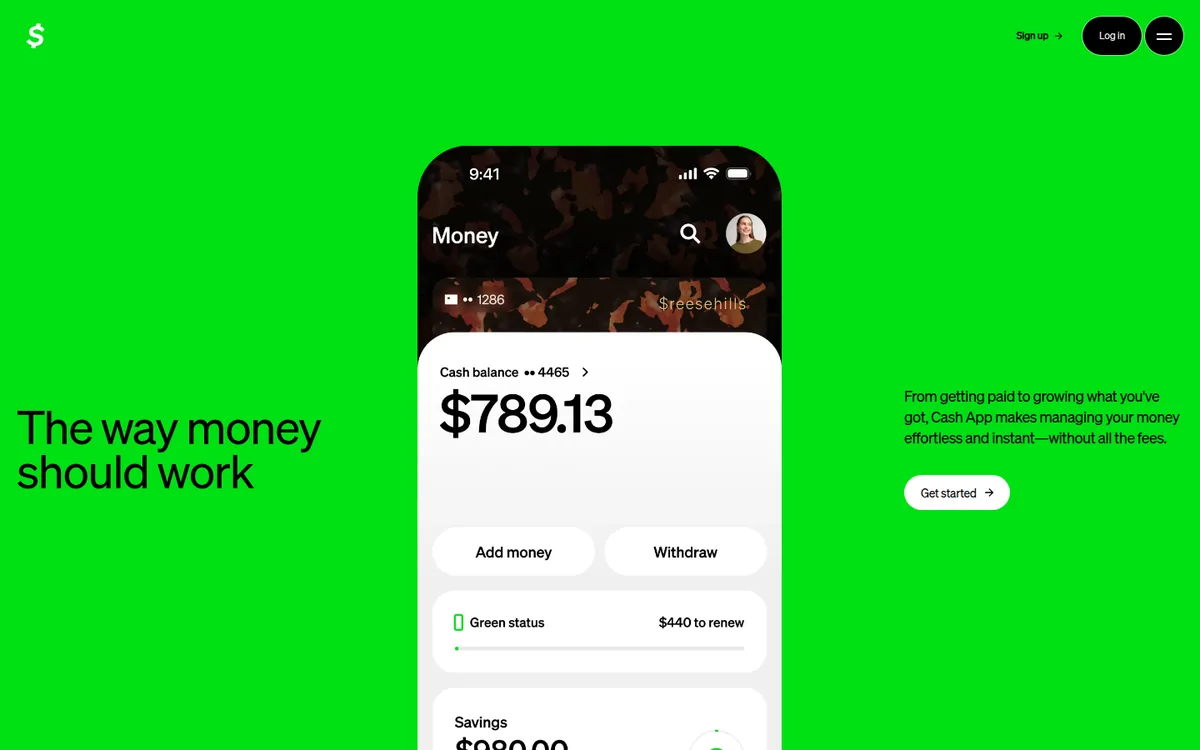
Cash App, live capture - the consumer-scale Lightning implementation: USD-balance payments over Lightning with 1:1 BTC custody.
The program set, honestly
Verification effort is the honest differentiator in this set - more than fees, more than custody. Cash App is the consumer-scale implementation: Lightning payments from a USD balance with automatic conversion, BTC held 1:1 and never lent, withdrawal to self-custody anytime [4][5]. The integration detail that matters to card users: the Lightning payment is converted from your USD balance automatically - you never hold the BTC unless you choose to, which makes the rail invisible in daily use and keeps the tax surface flat (spending dollars, not disposing of sats). Freedomia is the flexibility play - Lightning Address funding advertised as instant, no KYC at onboarding, and eight fallback chains if a route fails [8]. Moon is the cautionary row: Lightning-native design with 0% FX, but the site is behind a bot wall, no public activity has been verified recently, and nothing about the program is independently confirmed - the watch status is the page's honest output.
Warning: Lightning-native programs are BTC-only rails in a stablecoin world. If your income arrives in USDT or USDC, a Lightning card adds a conversion step rather than removing one - the bitcoin hub covers the two-rail trade. And the small-balance discipline applies doubly to unverified programs: load what a failed retry loop would cost, not what the channel could carry.
The 2026 state of play
The gap between the rail's quality and the program layer's maturity is this page's whole story, so it is worth stating plainly: the technology is production-grade, the programs built on it are 5, and one of them is unverified. The network numbers say infrastructure: thousands of channels, six-figure dollar capacity, consumer payments live at Cash App scale (Lightning payments launched for eligible customers in November 2025 [4]). What the network has not yet produced is a dedicated Lightning-card layer at scale - the programs here are the current implementations, and their limits are theirs, not the network's. The honest framing: Lightning top-ups are the best small-load rail in crypto today, wrapped in the market's least-verified program set. 40% of the fee data here is independently verified - read that number as "verify everything before the first load."
Where this goes next is worth watching for the same reason the 2025 Cash App launch mattered: every mainstream wallet and banking app that adds Lightning funding widens the rail's practical reach without waiting for the card programs to catch up. The infrastructure is arriving through the wallets first; the card layer is the part still being built.
Reading the ranking
The structural close: Lightning is a rail, not a product category - the 5 programs here differ more in custody and verification than in anything Lightning-specific, and that difference is the selection criterion. 20% of the programs here onboard without full KYC, 1 is US-available, and the median load fee is ~0%. Lightning-first users: Freedomia for flexibility (Lightning plus eight fallback chains), Cash App for the consumer-grade US stack [4][5]. Anyone storing value: this is the wrong niche - the self-custody hub is the structural answer, and the bitcoin hub holds the on-chain counterpart of every argument on this page.
Why does Lightning fit card top-ups better than on-chain?
Because card loads are small, frequent and impatient - exactly the profile on-chain fees punish and Lightning was built for. A Lightning payment settles in milliseconds to seconds at per-hop fees that round to cents; an on-chain load carries a flat fee ($0.13-0.25 at 1-2 sat/vB on 2026-10-01 [7]) plus a confirmation wait, and dust policy floors small outputs at 294-330 sat [6]. The bitcoin hub works the on-chain side; this page is the Lightning side.
What is the actual top-up flow?
The card generates a BOLT 11 invoice or a static LNURL-pay code [1][2]; your wallet routes the payment through channels; the program's node receives it and credits the balance - usually instantly, since Lightning payments finalize before the money moves. The card-side integration detail is where programs differ: static LNURL (Freedomia's Lightning Address) makes repeat loads one-scan-simple; per-load invoices are the more common pattern. Either way the reconciliation is clean - the payment either completes atomically or never left, so there is no "pending" state to track.
What happens if a Lightning payment fails?
Nothing leaves your wallet. Lightning's failure mode is "retry" - a failed route returns the HTLC to your wallet intact. That is the opposite of the wrong-chain risk on on-chain rails, and it is why Lightning top-ups are forgiving in a way on-chain sends are not. The practical caveat: channel liquidity between your wallet and the program's node varies, so a large load can fail on liquidity where a small one succeeds.
How big is the Lightning network behind these cards?
Roughly 19,800 public channels, ~2,690 BTC of capacity (about $226M at 2026-10-01 prices), per 1ml.com's live statistics [3]. That is enough for consumer card top-ups - the average channel carries ~0.135 BTC - but large loads may need MPP (multi-path payments) split across channels. The network is the reason small frequent loads work; it is also why a single big load can be slower than expected.
What is Cash App's Lightning integration?
The consumer-scale implementation: eligible customers scan a Lightning QR and pay from their USD balance with automatic conversion - the operator holds BTC 1:1, never lends it, and permits withdrawal to self-custody anytime [4][5]. Square merchants settle BTC-to-BTC or with conversion either direction. Deposits-via-Lightning limits are not publicly documented at check time - verify in-app before relying on them.
Why is Moon on a watch list?
Because verification failed both ways: the site sits behind a Cloudflare bot wall (all automated checks blocked), no recent public signals exist (no news, no product updates), and the program is BTC/Lightning-native with basic KYC. That combination - working product, no public activity, no independent verification - is exactly what a watch status exists to communicate. Do not load a balance that matters until the signal picture improves; the frozen balances guide covers why unverified programs earn that rule.
Do Lightning top-ups avoid tax events?
No - the rail and the tax are separate questions. A BTC top-up that the card converts to fiat is still a disposal of BTC (IRS: exchange for other property is taxable [see the bitcoin hub]); Lightning just moves the coin cheaper and faster. If anything, Lightning's small-load pattern creates more, smaller lots - which is clean to track but worth knowing before you fund in twenty small pieces.
What are the limits on Lightning top-ups?
Channel-level and program-level, and mostly undocumented. The network constraint: a single payment cannot exceed the channel capacity path to the program's node, which is why large loads belong on-chain. Program-side, minimums and per-load caps live in each card's terms - Freedomia's Lightning funding advertises instant credit with no published minimum friction [8]; Cash App's buy minimum is $1 for bitcoin purchases [5]. Treat limits as per-program facts, not network facts.
Is Lightning funding private?
More than on-chain, less than cash. On-chain BTC loads are publicly traceable forever; Lightning payments are only visible to the nodes on the route, and the program sees the payment but not your wallet's whole history. That is a real privacy improvement at the funding layer - but the card layer still records every purchase, so the improvement stops at your wallet. The Monero hub covers the stronger version of the same trade.
Should my whole card routine run on Lightning?
No - use it where it wins. 5 programs define this page, and the Lightning-capable ones are BTC-first products; if your spending is stablecoin or euro-native, the stablecoin or Europe hubs fit better. The right shape is Lightning as the small-load rail inside a diversified setup: instant top-ups when the balance runs low, on-chain or stablecoin rails for the monthly load. 2 of the programs here charge no monthly fee - the rails are the cost, not the subscription. And the balance rule from every other page applies with extra force here, because the program layer is the least-verified in the market.